Rethinking Rural Futures
Mapping Divergent Paradigms, Logics, and Strategies for Rural Transformation
Abstract: This chapter is a product of an ongoing inquiry into the past, present, and future of rural places. Initial drafts were workshopped in conversation with academics and development practitioners at Duke University and Makerere University as part of the "Rural Development and the Capability to Stay" project (2021-24). The conceptual framework was further refined through COMIT's Rural Transformations speaker series, which engaged several scholars and thought leaders whose work is featured in this book. This chapter serves as a conceptual anchor for this volume, offering a guide to the diverse and often competing ideas that animate contemporary debates on rural transformation. The authors begin by describing three overarching development paradigms: the modernization paradigm, which views rural areas as economically "backward" and in need of industrialization; the human development paradigm, which expands the focus beyond economics but often treats the needs of rural places as secondary to urban priorities; and the post-development paradigm, which rejects mainstream development altogether in favor of a "pluriverse" of worldviews and community self-determination. Within these frameworks, the chapter identifies specific logics—such as the agro-industrial logic of modernization or the tailored intervention logic of human development—that guide on-the-ground interventions. Finally, the analysis surveys key centers of alternative thought and practice that engage particular dimensions of rural transformation, including agroecology, community economies, appropriate technology, regionalism, and knowledge for transformation. This review aims to equip readers with the conceptual tools needed to critically assess different development strategies and imagine new, more just, and sustainable pathways for rural flourishing.
Introduction
The past few centuries have witnessed a dramatic transformation of human society in all its dimensions: economic, technological, political, cultural, spiritual, and intellectual. The rise of modern nation-states, the growth and spread of industrial capitalism, and the cultural, demographic, and technological changes associated with urbanization have radically reshaped collective life around the world. Often envisioned and justified as a process of "development," governments and international organizations pursue these social changes because of the many positive outcomes they promise to bring—and in many instances have brought—to societies around the world: significant increases in health and life expectancy, the widespread expansion of basic literacy and education, enhanced global interconnections and associations, a rise in civil society organizations at different levels, remarkable scientific and technological innovations, and advances in human rights and civil liberties.
However, these improvements in human well-being have been uneven and accompanied by a growing number of seemingly insurmountable challenges: global inequalities have risen to extreme levels, while hunger and malnutrition increase in absolute terms; the historic injustices of colonialism and slavery continue to strain political and economic relations today; an unprecedented number of people live under conditions of protracted conflict and displacement; human-induced climate change is pushing natural systems toward collapse; and the threat of nuclear war looms large. These interconnected challenges are growing in intensity and reinforcing one another, a phenomenon increasingly referred to as a "polycrisis."4 The coming decades will likely be characterized by increased social instability and turbulence as such challenges continue to escalate.
As part of these larger processes of historical change, human modes of living have been—and continue to be—transformed. Inherent in capitalistic economic models is an aggressive process of urbanization and industrialization accompanied by deep technological, cultural, and environmental changes. The concomitant urban transition is remarkable: the world has gone from being less than ten percent urban in 1820 to well over fifty percent urban today.5 Not only has the global distribution of populations changed, so has the very nature and dynamics of rural and urban settlements as well as their interrelations.
In our increasingly urban world, one of the intractable challenges before communities, governments, and international institutions is the future of rural places and peoples. No so-called "developed" country has yet charted a modernization pathway that supports rural flourishing. Many rural areas in the world's wealthiest countries still do not have satisfactory access to quality education, healthcare, or the internet. From the United States to Europe and Australia to Japan, rural areas tend to be materially poorer than urban ones, with insufficient infrastructure and economic opportunity as well as older and declining populations.6 In advanced capitalist economies, it is inefficient and unprofitable to provide these services to rural areas, which often require states to intervene just to meet basic needs. The challenges rural places now face can have dire consequences. In the United States, for example, deaths of despair—mortality risks from drug, alcohol, and suicide—are positively associated with the degree of rurality.7 Must a country's development require the "hollowing out" of rural places?8 Is this the development trajectory other countries, particularly those that still remain primarily rural, should aspire to follow?
This chapter assumes that, among the many questions that humanity will need to face in the coming decades, one of them has to do with our conception of rural futures. If we do not accept rural decline as an inevitable feature of development, how should we pursue rural flourishing? How can the current conditions of injustice, poverty, and decline that afflict so many rural areas of the world be reversed? Relatedly, how can we see the strengths, vital knowledge, and creative resilience of rural communities, rather than only what they lack? Looking forward, what are the relationships between the full spectrum of civilizational units—megacities, cities, towns, neighborhoods, villages, hamlets, and other settlements—that are most conducive to global justice and collective prosperity? How might alternative visions for rural transformation stimulate new thinking about social transformation more generally, with implications for both rural and urban futures?
To begin to explore these questions, this chapter describes the results of an exercise to map the conceptual contours of competing visions and strategies for "rural development." Understanding the underlying paradigms, logics, and assumptions that shape different approaches to rural transformation is essential for moving beyond the repetitive cycles of development interventions that fail to improve rural lives. Without this conceptual clarity, even well-intentioned efforts risk reproducing the very problems they seek to solve. Our review draws on extensive literature reviews, case study research, and workshops with academics and development practitioners since 2021.9 This mapping exercise is inevitably limited to the knowledge and worldviews of the authors and our collaborators; it is an artifact of our current thinking, and we hope it will continue to be refined by those with complementary disciplinary perspectives and on-the-ground experiences with rural transformation. The primary goal of this review is to support greater interdisciplinary collaboration, comparative research, and fresh perspectives on the past, present, and future of rural places.
Placing the "Rural" in Development Thinking
What Counts as "Rural"?
"Rural" is a fuzzy and contested term, popularly associated with open spaces—fewer people, more nature—and livelihoods grounded in working with the natural world: farming, fishing, pastoralism, etc. Yet it can be very difficult to define what counts as rural today, because rural places are not homogenous; they vary greatly in terms of geography, population density, economic activities, and culture. A sparsely populated farming community in one region may have very different characteristics from a remote mining town or a village reliant on tourism or artisanal crafts. A single definition of rural, then, inevitably fails to capture the varied nature of rural places and peoples. As rural areas undergo rapid changes due to urbanization, globalization, and technological progress, the challenge of establishing a consistent definition becomes even more pronounced.
The distinction between rural and urban areas often exists on a spectrum rather than as a clear-cut division. Peri-urban or "rurban" areas, for instance, blend characteristics of both rural and urban environments, with agricultural activity alongside suburban housing or small-scale industries.10 As rural areas become more integrated with cities through infrastructure and migration, the line between rural and urban becomes progressively blurred.11 Increased industry, circulation, and population growth can make rural areas appear more urban, even while they retain aspects of rural life.
Globalization adds another layer of complexity. Many rural places are now economically integrated with nearby cities or global markets, which depend on them for supplies, labor, and trade. In some cases, rural areas might even be centers for tourism or cultural industries linked to urban markets. This interconnectedness challenges traditional views of rural areas as separate, isolated, or self-sufficient, highlighting instead the fluid and dynamic nature of the relationship between rural and urban spaces in today's world. "New rurality" scholarship thus emphasizes the diversification of rural livelihoods, the growing importance of non-agricultural activities, the intensification of rural-urban interactions, and cultural shifts within rural populations.12
The challenges of defining the rural are reflected in the evolution (and inadequacies) of administrative classifications. Today, most governments categorize places as rural based on characteristics such as population size, density, and distance from urban places. These criteria are easily measured. For instance, in many African countries, towns or settlements with a population below a certain threshold (often 2,000 to 10,000 people) are considered rural, while those exceeding the threshold are classified as urban. Alternatively, the European Union uses a "degree of urbanization" classification that defines areas as cities, towns and suburbs, or rural areas based on population density and the presence of contiguous urban grid cells. The United Nations Statistical Agency endorsed this degree of urbanization approach for international statistical comparisons.13 The United States Department of Agriculture's Rural-Urban Continuum Codes similarly classify United States counties based on population size, degree of urbanization, and adjacency to metro areas.
At a conceptual level, the degree of urbanization framework defines rural places only by what they are not: urban. This implicitly reinforces the "deficit discourse"—focusing on what rural areas "lack" compared to urban ones—that has come to characterize how we see rural places today. Scholars of rurality have long lamented how rural places are cast as landscapes of disadvantage and how these discourses, as Seán Kerins writes, "play a role in wider social processes of legitimation and power."14 The rural deficit discourse shapes the nature and substance of government policy; it frames what people are able to see—while suppressing other ways of seeing—in a way that makes it hard to move from a mindset of "problems" to one of "possibilities."15 Research finds that the rural deficit discourse can lead to significant negative impacts in spheres like rural education and health.16
More positive criteria of what counts as rural often privilege economic or sociocultural dimensions. For example, government classifications might also take into consideration the economic structure of a place. Rural places are usually seen as areas where a significant proportion of the workforce is engaged in agriculture, forestry, fishing, or other activities associated with the primary sector. In India, for example, the government classifies an area as rural based on criteria that include population size (less than 5,000 people overall) and density (less than 400 people per square km) as well as whether more than a quarter of working age men are employed in agriculture.17
Rural places are also generally seen as places with distinct sociocultural characteristics, particularly in places with Indigenous communities. In countries like Peru, Bolivia, and Ecuador, Indigenous communities in the Andes and Amazon are often defined as rural based on a combination of their subsistence farming practices, communal land ownership, and distinct cultural traditions. These definitions can at times falsely conflate "Indigenous" with "rural," however, while failing to capture the growing presence of Indigenous people in urban places.18
For the purpose of this review, we acknowledge that no simple definition can ever capture the multifaceted and evolving nature of rural communities and places today. Only by examining the rich diversity of rural areas will we develop a more nuanced and meaningful understanding of them and their role in contemporary society. However, as this is a chapter about rural transformation, we should clarify how we ourselves are initially defining "rural." We focus on two main criteria: population density and the economic activities of the local population. What distinguishes rural from urban places are lower population density and a significant share of the population engaged in the primary sector. We also embrace the idea of a rural-urban spectrum and the idea that the threshold at which an area becomes primarily rural depends on population density and economic activity criteria that is relevant to a particular society. We do not see the need to prioritize distance from urban places or distinct sociocultural characteristics as fundamental criteria to distinguish rural places, though we acknowledge diversity in these domains has important impacts on rural communities and their development pathways.
Why Focus on Rural Development?
Although rural places have experienced significant transformations across the ages, "rural development" only emerged as a formal field of practice and study over the course of the twentieth century. In the United States, the field's beginnings are often traced to President Theodore Roosevelt's Commission on Country Life (1908), which was charged with investigating the "deficiencies" of rural life in an industrializing America. The concern was that rural places were being left behind, leading to social problems within them as well as an exodus to cities. As a global enterprise, rural development crystallized after World War II. Amid decolonization and the Cold War, the economies of new nations in Asia and Africa were overwhelmingly agrarian; "development" for these newly independent countries necessarily entailed "rural development."
While rural development was initially conceived as a process of technology transfer and top-down state planning, the failures of this model spurred new approaches in each subsequent decade of the twentieth century.19 The 1970s and '80s, for instance, brought a critical shift toward multisectoral approaches at the regional level that required the active participation of local communities and institutions. Since the 1990s, a new consensus has emerged: rural development cannot be pursued in isolation from broader regional, national, and global processes. Expanding markets, infrastructure, and technology have enhanced the interconnectedness of rural and urban places, fueling population movements between them. This recognition of deep rural-urban interconnectedness has, in turn, deflated rural development as a distinct and dynamic area of theory and practice.
Given this interconnectedness, why revitalize a focus on rural development? To provide a compelling answer to that question, it is important to emphasize that a focus on rural development does not imply that urban development is any less important, nor does it mean that rural development can be considered in isolation from urban areas. As discussed earlier, "rural" is not an easily reducible or homogeneous category. Furthermore, such a focus does not commit us to imagining some idealized future that is predominantly rural—at least in the way that the term is understood today.
With these points in mind, one can consider several reasons why considering the rural as a lens of analysis and rural development as an area of inquiry is still important and will remain so for many years to come. First, a significant share of humanity continues to live in rural areas—over 3.4 billion people, an increase in absolute population of over fourteen percent since 1990.20 Yet this population faces consistently higher rates of multidimensional poverty—defined as deprivations in a range of health, education, and living standards indicators—as compared to urban dwellers.21 The prevailing response to the challenge of rural poverty is to pursue the continued industrialization and urbanization of societies. However, this only fuels rural out-migration and concentrates economic and educational opportunity in cities. Such an approach implicitly relegates rural places to either a state of decline or secondary status in relation to urban places and priorities. This bias toward "the urban as advanced" is exemplified in how the rural is now defined, as described in the previous section: the most common definitions focus on the relative lack of urbanization. There is still much to be learned about how to meaningfully improve the prospects of rural futures for the billions who still live in rural settings.
Second, and more fundamentally, prevailing development paradigms are failing to resolve our most pressing global challenges—including poverty, climate change, and wealth inequality—and alternative strategies for rural transformation may be a critical source of solutions. To see these possibilities, it is essential to move beyond a rural deficit discourse and recognize the strengths and contributions of rural peoples to global systems. It is the world's rural population that grows the majority of the world's food, for example, and acts as stewards of our planet's natural resources. Rural people play a pivotal role in climate regulation, water management, and carbon sequestration, making them indispensable to environmental sustainability. Further, rural communities embody diverse knowledge systems, societal configurations, and relationships to land and the environment that can inform more sustainable development strategies. Much might be gained from striving to build on rural strengths rather than relying on established development paradigms that only seem to herald rural decline. Thus, the renewed pursuit of rural development is one way to not only redress current injustices but also to learn about alternative models of social transformation—with implications for both rural and urban futures.
Three Development Paradigms
Three paradigms shape the contemporary landscape of development thought and practice. Here, a "paradigm" refers to a comprehensive worldview that fundamentally shapes understandings and approaches to "development." A paradigm is characterized by a distinct set of shared values, core assumptions, prevailing thought patterns, preferred research methods, and common practices that collectively determine what constitutes development and how it should be pursued. The three dominant ones we identify—the modernization, human development, and post-development paradigms—are essentially ideal types, possessing their own distinct values, logics, and conceptions of human nature and flourishing. Each also carries its own assumptions about the nature and direction of rural transformation.
Briefly, the modernization paradigm is predicated upon a vision of progress and prosperity that is inextricably linked to the inexorable processes of urbanization and industrialization. Within this conceptual framework, cities are exalted as the engines of growth and dynamism, while agricultural livelihoods and rural modes of existence are relegated to the status of backward and regressive vestiges of a bygone era. The logic of modernization is one of universal integration or even reduction, wherein all aspects of human life are subsumed into the all-encompassing process of modern industrial development. Rural areas are either transformed into mere satellites of agro-industrial development, serving as ancillary providers for the voracious appetites of urban centers, or they become the targets of relentless urban expansion and encroachment.
The human development paradigm (or the sustainable development paradigm) emerged out of the search for more sustainable and just alternatives to modernization. It endeavors to adopt a more holistic and encompassing understanding of the human experience, recognizing the multifarious goods and values that contribute to the richness and complexity of human flourishing. This approach seeks to articulate a more balanced and comprehensive vision of development by incorporating a wide range of priorities and emphases. The UN's Sustainable Development Goals—and the Millenium Development Goals, their predecessor—emerged out of this paradigm. Despite a wider range of concerns than proponents of the modernization paradigm hold, spurring economic growth and industrialization remain central to development strategies to alleviate poverty and enhance well-being that operate within the human development logic. In this sense, the human development paradigm does not fundamentally challenge the underlying industrial-capitalist logic of the modernization paradigm but instead incorporates a wider range of social, cultural, and environmental concerns besides the economic.
The third primary approach, the post-development paradigm, emerged in the 1980s as an alternative to existing development paradigms. "Post-development" is an umbrella term that unites a range of thinkers and practitioners who reject the concept of development altogether. This paradigm rejects current models of urbanization, industrialization, and the hegemony of Western societies in development practice and finance. There are significant variations in what post-development approaches look like in application; in fact, the rejection of a single model of development is fundamental to post-development thought. Post-development thinkers emphasize concepts like the "pluriverse" and the need for "a deep process of intellectual, emotional, ethical, and spiritual decolonization."22 Post-development approaches tend to emphasize local and Indigenous knowledge and alternative economic systems. In an attempt to avoid exploitation or subservience, certain strands of post-development thought envision communities and peoples achieving self-sufficiency and autonomy from dominant economic and cultural systems, while others might envisage a global revolution led by grassroots movements.
Below, we expand the contours of each paradigm and provide examples of the strategies for rural transformation that arise from each one. Specifically, we examine the underlying logics and assumptions shaping specific, consistent, and guiding patterns of thought and practice that orient particular development strategies and interventions. Thus, logics are the practical outworkings or strategic manifestations of a paradigm's core assumptions and values. They provide the rationale and direction for how rural transformation is conceptualized and pursued on the ground. After completing this survey of the main rural development paradigms and their underlying logics, the final section of this chapter describes alternative centers of thought and practice that emphasize particular dimensions of rural transformation: agriculture, local economies, technology, education, and regional integration.
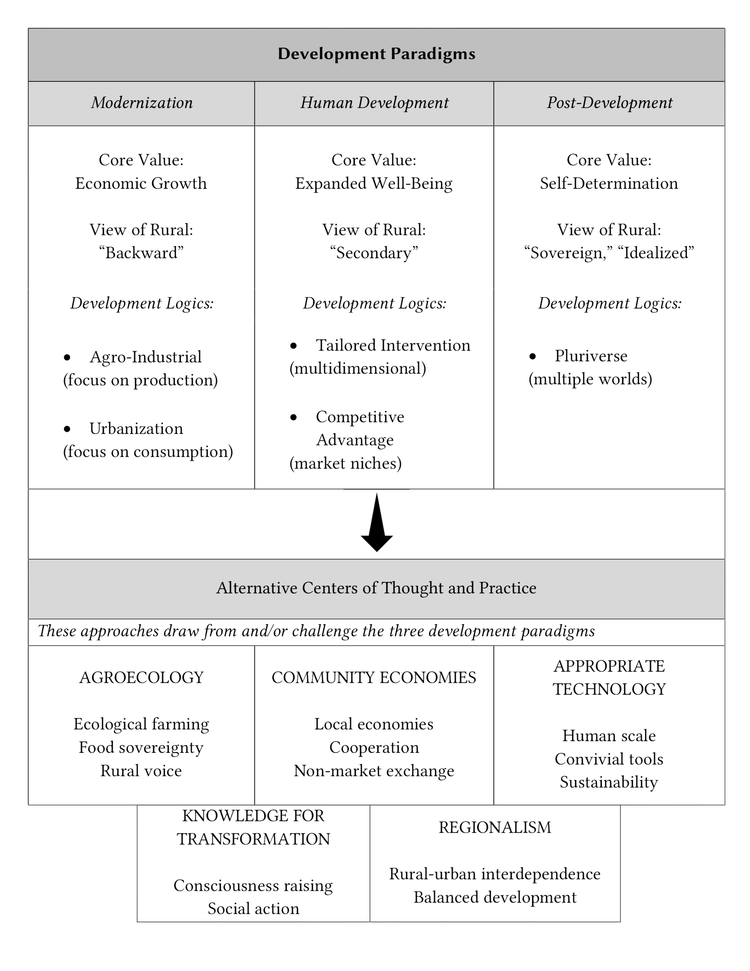
Figure 1: Development Paradigms and Rural Transformation: A Conceptual Map
We acknowledge that the differences between these paradigms are not always clear cut. Some might reasonably argue, for instance, that the human development approach is just a modification or evolution of the modernization paradigm. Nevertheless, there are distinct features and values in the human development paradigm's approach to measuring progress in rural development that merit its analysis as a separate paradigm operating in parallel to the modernization paradigm. Further, post-development thought is admittedly much broader, containing within it a wide range of worldviews. However, it is quite coherent in terms of its criticism of the development field itself (including the modernization and human development paradigms). Additionally, a number of key concepts and assumptions underpin this discourse, which, in turn, creates a distinct conceptual space for alternative discussions about rural prosperity and futures. By highlighting the underlying logics and tendencies of each paradigm, we can gain valuable insights into the deeper patterns and structures that shape the contemporary landscape of development thought and practice.
Modernization
The modernization paradigm assumes modernity is an age of transition toward a predominantly urban future and sees distinctly rural ways of life as either backward or irrelevant. In an industrial-capitalist world system, rural areas are inherently peripheral to the urban core.23 For the classical modernization paradigm, then, rural development entails the transformation of social, economic, political, and cultural systems to reflect those of modern, "advanced" societies.24 For this reason, knowledge from these societies is prioritized, guiding the development process, while other forms of knowledge (Indigenous, spiritual, traditional, etc.) are often marginalized. Progress is most often measured in economic terms—as the increase of material production and consumption. By extension, the value of rural areas is also primarily economic: they have the raw materials and labor needed to produce goods for urban consumption, or they are new sites for urban and market expansion.
Depending on the degree of industrialization within a given society, the modernization paradigm gives rise to different strategies for rural transformation. The following subsections describe the two dominant ones: the agro-industrial and urbanization logics. These are two sides of the same industrial-capitalist coin, with one focusing on enhancing production and the other on enhancing consumption in (and of) rural places.25
Agro-Industrial Logic
The agro-industrial logic views rural places as sites of intensive food production for urban places, export, or both.26 According to this view, the most efficient way to pursue that purpose is either through the adoption of agro-industry or agribusiness—which generally focuses on high-input, high-yield, and scaled-up monocropping—or through the recruitment of industries and businesses to rural areas. This logic has its roots in early modernization theory.27 According to this logic, progress is achieved by extending expert, scientific knowledge and technology to rural places, and development is measured in economic terms: in a household's increased production, income, or consumption, or in a nation's domestic product. The social, political, cultural, and spiritual life of rural populations and traditional knowledge systems are not given significant attention or may even be seen as an obstacle to adopting more "productive" or profitable economic systems.
One clear example of the agro-industrial logic at work can be found in the history of the Green Revolution, which began in the 1940s as a collaboration between the Rockefeller Foundation and the Mexican government to address potential food shortages by increasing crop productivity. The resulting development of new technocratic farming practices—including high-yield crop varieties, chemical fertilizers, pesticides, and advanced irrigation and mechanization techniques—went on to revolutionize agriculture around the world. Many countries such as India and Mexico achieved significant increases in food production. However, wealthier farmers tended to benefit from these increased yields and incomes, while smaller farmers often struggled to access the necessary inputs, exacerbating rural inequality and accelerating the loss of small farms and local farming knowledge. The Green Revolution thus helped consolidate a powerful transnational corporate system of industrial agriculture.28 It also had detrimental environmental impacts, including soil degradation, water depletion, and biodiversity loss due to the overuse of chemical inputs and intensive irrigation. Overall, despite the Green Revolution's success in achieving its initial stated aims by boosting food production and advancing rural (agro-)industrialization, the uneven distribution of benefits and the long-term ecological costs raised significant concerns about the sustainability of this rural development logic.
The agro-industrial logic was not limited to market-based systems. A parallel manifestation, driven by state-socialist command economies in the twentieth century, pursued the same goals of boosting food production and advancing rural (agro-)industrialization. Projects such as the Soviet Union's forced collectivization in the 1920s and '30s, China's Great Leap Forward in the late 1950s, and Tanzania's Ujamaa villagization program in the 1970s all sought to radically transform rural society. These were top-down modernization projects designed to break traditional modes of production, forcibly resettle populations into centralized villages, and extract rural surpluses to fuel state-led industrialization. Ultimately, these command-economy projects also failed to produce sustainable rural prosperity, often resulting in catastrophic social upheaval and famine, and have been almost universally abandoned.29
A more contemporary example of the agro-industrial logic at work is in development strategies to attract industry to rural areas. In advanced, industrial economies, it is common for rural economic development strategies to court businesses to build industrial plants or factories in their areas in order to create jobs, drive economic growth, and increase public revenue while combatting rural depopulation and economic stagnation. In "industrializing" countries, many governments feel compelled to court foreign investors for similar reasons. Beyond job creation, their focus is on financing economic growth and achieving economic diversification. Ultimately, this strategy integrates rural places into the global economy, but often in a subordinate position. The rural area provides the land, labor, and waste absorption, while the capital and decision-making power remain elsewhere.
By focusing narrowly on economic metrics, agro-industrial and industrial approaches to rural development hasten the disintegration of traditional rural livelihoods and ways of life and, accordingly, stimulate rural out-migration. This is one reason that no country has ever experienced significant economic growth without a concomitant rise in population movements away from rural places.30
Urbanization Logic
The urbanization logic sees rural places as sites for the extension of urban markets, services, and goods. The animating principle of this logic is to see rural spaces as sites of consumption rather than production.31 The focus of rural development within this second logic is on extending markets, goods, services, and ways of life to rural places. This often leads to the scaled urbanization of rural places, whether through urban expansion and the suburbanization of previously rural places, or through a more general transformation of rural village life to reflect the political, economic, social, and cultural structures of urban areas. Many of these efforts focus on closing the perceived gap between rural and urban places until there is no longer a clear distinction between rural and urban life other than, perhaps, population density and the prevalence of open space.
The urbanization of rural places can occur as rural towns grow or city limits expand such that previously "rural" land becomes administratively recategorized as "urban." However, urbanization also refers to changes in the economic, demographic, and sociocultural character of rural places through population movements. This type of urbanization of rural places was ironically accelerated by a so-called counter-urbanization movement in many advanced, industrial countries from the 1970s onward. In this process—what some call "rural gentrification"—wealthy urban residents moved to rural places to escape the city and connect to an idealized rural environment.32 Their movement changed many rural dynamics, impacting everything from land and housing markets to feelings of class polarization.33
Some strategies for rural development, particularly in post-industrial countries like the United States, actively seek to repopulate and re-dynamize rural places through rural gentrification (though they may not describe it as such). Many such efforts focus on "digitizing" rural economies to support a more seamless work transition from urban to rural areas. Consider initiatives like the Center on Rural Innovation (CORI) in the United States. CORI describes its mission in the following terms:
We help rural towns across the country become strategic about economic development in the 21st century. We know that the barriers facing rural communities are multidimensional, so we bring a comprehensive range of expertise, programs, and partnerships to the table to ensure that all Americans, regardless of geography, are connected online and able to participate in a 21st century innovation economy [...]. At CORI, we help small towns devise digital economy ecosystem strategies that center around growing the economy with digital jobs, technical skill-building, entrepreneurship, and smart amenities to attract and keep working-age adults.34
CORI's community success stories often feature young talented adults who move from urban places to rural communities where they can still have meaningful modern work while also gaining a higher quality of life and lower cost of living. In this way, the digitization of rural economies could be seen as a form of urbanization because the distinction between the rural and urban fades as economies become primarily based on the service and knowledge sectors.
This shift has significant implications for the use value of rural land, as its value for agriculture is increasingly supplemented or replaced by new uses including real estate development, tourism, ecosystem services (like carbon sequestration), and renewable energy generation. This in turn has led to the growing financialization of rural land, whereby financial institutions and investors treat land as an asset class rather than a productive resource. The resulting competition between traditional farming, conservation, development, and financial speculation is fundamentally reshaping how rural land is valued, used, and controlled around the world.35
Overall, the agro-industrial and urbanization logics share a foundational concern with economic growth, in terms of both production and consumption. Communities, scholars, and practitioners have for decades questioned the materialistic and Western-centric vision of development underpinning the pursuit of rural transformation. Although there has been a vast increase in the production of material resources worldwide since the mid-20^th^ century, the distribution of these resources is increasingly unequal. Poverty and malnutrition continue to exist on an enormous scale, and many short-term gains made were reversed as a result of the COVID-19 global pandemic, highlighting the fragility of such improvements.36 In some cases, traditional social systems grounded in reciprocity have given way to market-based systems that leave vulnerable segments of the population without a safety net, driving certain segments of the population into deeper poverty and more precarious circumstances. The question of environmental sustainability is another pressing concern: were every society to reach the state of consumption present in advanced economies today, the Earth could not sustain it, and humanity would likely reach a state of civilizational collapse.37
Human Development
In response to the limitations of the modernization paradigm, the human development paradigm offers a more expanded view of development that is focused on a broader range of social and environmental concerns beyond the economic and advocates for more context-sensitive and people-centered development strategies. This logic is revealed in the evolution in development thinking from discussing economic development to human development, a shift accelerated by economists like Amartya Sen and Mahbub ul Haq. Human development refers to the process of expanding people's choices and capabilities to improve their overall well-being.38 Whereas economic development is typically measured by indicators such as gross domestic product (GDP), income levels, and employment rates, human development includes additional factors like life expectancy, literacy rates, educational access, healthcare, and gender equality.
The human development paradigm was formatively shaped by a critical discourse on participation. While earlier approaches to development were generally top-down, a counter-discourse emerged in the late twentieth century that strove to put the concerns, aspirations, and voices of everyday people at the center of development strategies. The Sustainable Livelihoods Approach (SLA), for instance, marked an important move away from one-size-fits-all strategies toward more participatory and context-specific approaches that build upon the diverse strategies that rural people employ to make a living.39 SLA is a people-centered, dynamic approach that highlights the complex and multifaceted nature of rural livelihoods—which often extend beyond agriculture—and aims to build on existing strengths rather than addressing perceived needs. Its emphasis on participatory methods aligned with broader trends of the 1980s and '90s, including work on Participatory Rural Appraisal (PRA) methods.40 However, as large development agencies adopted SLA, there was a tendency to reduce its complexity and instrumentalize its methods, often departing from the more nuanced, complex views of its pioneers.41 For instance, the participatory nature of the approach sometimes gave way to more rigid, checkbox-style applications that captured neither the dynamic and diverse nature of rural livelihoods nor meaningful community participation.
The sustainability discourse also fundamentally shaped the human development paradigm. It emerged in the 1970s and '80s as a direct response to the observable failures of the modernization paradigm, whose singular focus on economic growth and industrialization led to undeniable environmental devastation (resource depletion, pollution, etc.) and widening social inequalities. The most famous definition of sustainable development comes from the UN's Brundtland Report, Our Common Future, which called it "development that meets the needs of the present without compromising the ability of future generations to meet their own needs."42 This definition signaled a conceptual shift in development thinking away from a singular focus on economic growth and toward finding a balance between economic growth, social progress (e.g., in health, education, and justice), and environmental protection.
Today, the human development paradigm's most prominent manifestation can be found in the Sustainable Development Goals (SDGs), "a shared blueprint for peace and prosperity for people and the planet, now and into the future," overseen by the UN.43 The seventeen SDGs are a comprehensive set of interconnected global targets that the UN adopted, ranging from No Poverty and Gender Equality to Climate Action and Sustainable Cities, all designed to balance social, economic, and environmental objectives by 2030. The statement of the SDGs, along with that of their predecessor framework, the Millenium Development Goals, led to important shifts in discourse and policy agendas at the national and international level and supported new funding mechanisms for a wide range of development projects with economic, social, and environmental goals. However, most sustainable development goals remain stubbornly out of reach—just eighteen percent of the SDGs are on track to be met by 2030, and a greater share are regressing.44
The human development logic does not espouse an a priori view on the rural and its relationship to the urban. In practice, however, development strategies within a human development paradigm implicitly tend to treat rural places as secondary to the urban. This is because human development approaches strive to improve human well-being within the world as it is—and it is already shaped by the urban bias of capitalist development. Thus, the emphasis on expanding people's choices and capabilities, for example, might extoll the many benefits of urban living and rural out-migration as ways to expand individual freedoms and well-being.45
In rural places, development strategies operating within the human development paradigm tend to focus on meeting the SDGs—or some resonant formulation of goals—with a core interest in enhancing the economic production and consumption of rural places in order to improve the lives of rural peoples. After all, two of the SDGs include Economic Growth and Industrial Development, which tend to fuel urbanization processes. Thus, too often, rural places are still seen as landscapes of social and economic disadvantage. However, unlike the modernization paradigm, the human development paradigm puts greater emphasis on multisectoral interventions and the reality that one size does not fit all—and thus, that the specific details of economic development strategies need to be tailored to the social, economic, and cultural context of a given setting. The following describes two logics for rural development operating within the human development paradigm.
Tailored Intervention Logic
The tailored intervention logic operationalizes the human development paradigm's focus on participation and multidimensional well-being. Consequently, the pursuit and evaluation of progress should account for measures beyond simple economic output, including improvements in health, schooling access, gender equality, and community empowerment. Rooted in people-centered frameworks like the SLA, this logic moves away from top-down planning by placing a greater emphasis on community participation in the development process.46
One of the most prominent and well-funded examples of this logic was the Millennium Villages Project (MVP). Beginning in 2004, this massive development effort was a direct attempt to prove that sub-Saharan Africa could meet the MDGs by 2015. It received hundreds of millions of dollars in funding from private philanthropic donors (most notably Open Society Foundations), national governments of participating and donor countries, and the World Bank, among others. Spearheaded by Jeffrey Sachs, who was director of the Earth Institute at Columbia University at the time, the MVP eventually reached seventy-nine villages across ten African countries.
The MVP's emphasis was on community-led development that could enable rural peoples to "get on the ladder of development" and "climb on their own":
The Millennium Villages project [sic] offers a bold, innovative model for helping rural African communities lift themselves out of extreme poverty. The Millennium Villages themselves are proving that by fighting poverty at the village level through community-led development, rural Africa can achieve the Millennium Development Goals by 2015 and escape from the poverty trap. By applying this scalable model to give them a hand up, not a hand out, people of this generation can get on the ladder of development and start
According to this logic, the reason villages are not advancing is because they are stuck in a poverty trap. "Simple solutions" to rural poverty exist, and the animating assumption of the MVP was that a "big push" of basic investments in natural assets, human capital, infrastructure, and microfinance, communities would move out of the poverty trap into a state of sustained development that does not depend on external support.48
Unfortunately, the project did not achieve its intended results and was disbanded in 2015. Critics argue that the MVP exemplified the gap between rhetoric and reality. Despite its emphasis on "tailored" and "community-led" approaches, the projects were still primarily designed by outside academics with a poor understanding of local cultures and markets.49 Furthermore, the "simple solutions" of fertilizers and genetically modified seeds often led to new levels of dependence on expensive products from large industrial companies. The challenges the MVP faced—including the persistence of top-down, technocratic approaches, despite a stated commitment to community participation, and an overreliance on external funding—are not distinct to that project and remain widespread today.
Competitive Advantage Logic
Another logic for rural transformation within the human development paradigm is the competitive advantage logic. This describes strategic, context-sensitive approaches that, rather than pursuing unthoughtful urbanization, seek to advance rural places by identifying and leveraging their distinct assets—such as unique ecologies, cultural traditions, or artisanal skills—in the local, national, and global marketplace. This logic is captured well by Green and Zinda, who argue in the Handbook for Rural Development that some of the most successful strategies for rural development focus on identifying competitive niches in markets and building on rural amenities.50 While economic competitiveness remains a central animating principle, the actors operating within a competitive advantage logic are often motivated by values related to sustainability, local production, meaningful work, and conservation. These values guide how local actors participate in the market.
Unlike the agro-industrial or urbanization logics, the competitive advantage logic often includes economic development strategies grounded in small-scale agriculture or distinctly rural commodities. The emergence of artisanal food systems is an example of the former, and an emphasis on nature tourism is an example of the latter. Artisanal food systems refers to the production of niche products, like cheese, fruit preserves, cured meats, or oils and vinegars, often made by hand by skilled artisans using traditional methods. The focus is on farm-to-table food systems that use locally sourced products from small-scale producers to support the local economy. Thus, although artisanal food systems do not fundamentally challenge market-based approaches to the economic development of rural areas, they are intentionally oriented toward local production and consumption and resist the scaling up assumed in agro-industrial growth models.
The rise of nature tourism is another example of the competitive advantage logic. Access to nature is a unique feature of rural places and may be conceived of as a commodity desired by urban populations. In many rural places, investment in bed-and-breakfasts, eco-lodges, event venues, or more general nature tourism can provide a more lucrative income for rural families than food production—signaling an economic transition from the agricultural to the service sector. This resonates with the modernization paradigm and its urbanization logic described above but is distinct because of the focus on uniquely rural commodities and experiences as well as the attention to questions of sustainability or conservation.
The competitive advantage logic offers a strategic pathway for rural development that leverages distinct local assets to engage with broader markets while often prioritizing values beyond mere economic growth. However, its reliance on market mechanisms generates a fundamental tension where these values and the cherished distinctiveness of rural places risk being reshaped, and potentially diluted, by the very forces of competition and commodification it seeks to harness. It is notable that, to succeed within this approach, rural peoples—farmers, artisans, hoteliers, etc.—often have to become business savvy entrepreneurs or cooperatives in order to survive.
Overall, the human development paradigm and its associated logics struggle with a lack of coherence. In the case of the tailored intervention logic, it tends to agglomerate disparate objectives and targets into sprawling lists without a clear framework for their integration. As a consequence, on-the-ground interventions inspired by this paradigm often remain fragmentary and piecemeal, failing to coalesce into a truly transformative approach. Moreover, despite its lofty ideals and aspirations, the human development paradigm often struggles to counteract the overwhelming economic and social forces associated with modernization, which continue to exert a dominant influence on the trajectory of rural transformation. This is particularly the case for strategies within the competitive advantage logic, which must wrestle with the inevitable commodification of nature and work that comes with market competition.
In the end, development projects within the human development paradigm still tend to favor economic and social objectives over environmental ones.51 For this reason, many argue that the human development paradigm does not fundamentally challenge the underlying industrial-capitalist logic of the modernization paradigm and is thus incompatible and incoherent with truly sustainable development.52
Post-Development
The modernization and human development paradigms are the dominant forces shaping development policy and practice today. However, there is a consolidated body of scholarly thought and social resistance to the foundational assumptions and methods of both paradigms. The post-development paradigm represents an entirely different way of thinking about rural transformation, one that rejects the very concept of development as materialistic, Western-centric, and inherently colonial. It rejects the industrial-capitalist logic of mainstream development strategies and focuses on protecting places and communities to advance endogenous, self-determined processes of social change.
The post-development paradigm emphasizes the potential plurality of rural futures.53 Decolonial scholars have advanced the concept of the "pluriverse" as an alternative to the dominant idea of a single, homogenizing model of modernity and development. The pluriverse represents a world in which multiple ways of being, knowing, and living coexist, challenging the universalizing and Western-centric narratives of progress and development. This pluralist logic—far from viewing rural places as backward, irrelevant, or secondary to modern, urban ways of life—sees rural communities as having local knowledge and Indigenous lifeways that must be preserved and protected. Post-development thought thus emphasizes bottom-up knowledge generation and community-led social action. Social movements embodying this pluralist logic often emphasize issues of environmental sustainability, identity, cultural belonging, economic justice, and self-determination.
There are many examples commonly upheld by post-development scholars as examples of the kinds of diversity that should be cultivated within a pluriversal society. Buen Vivir is one. Rooted in Indigenous Andean cosmologies, Buen Vivir is an alternative worldview that focuses on living well and in harmony with nature and community.54 Buen Vivir rejects dominant development paradigms that focus on economic growth and accumulation, instead promoting balance or equilibrium within the community and with the natural world, along with collective rights and Indigenous knowledge. This worldview has influenced national policies in countries like Ecuador and Bolivia, where recent constitutional changes now recognize the "rights of nature."
Another example is the Zapatista Army of National Liberation (EZLN), which emerged in the mid-1980s in Chiapas, Mexico, as a response to neoliberal economic policies and the marginalization of Indigenous communities. Following the North Atlantic Free Trade Agreement (NAFTA) in 1994, EZLN declared war on the Mexican government, which ended after twelve days with a ceasefire and the right to self-government. The EZLN emphasizes self-governance, community control of resources, and the preservation of Indigenous ways of life. Echoing the idea of the pluriverse, the EZLN declared in 1996 that "in the world of the powerful there is room only for the big and their helpers. In the world we want, everybody fits. The world we want is a world in which many worlds fit."55
Other examples of post-development thought put into practice include the countless intentional communities (including "communes") that have arisen around the world to build a fundamentally different kind of society from the ground up. These efforts might constitute their own logic, in that the purpose of these intentional communities is often not to engage or transform existing political-economic systems, but to instead build a fundamentally different society at a small scale. Intentional communities share an emphasis on cultivating new patterns of life and social structures, often with a strong social and spiritual mission. Responding to the social ills, materialism, and alienation of present-day society, these initiatives aim to build an entirely new way of life.
People have started intentional communities since the dawn of modernity as a countermovement against the forces of industrialization, urbanization, and materialism. They are often strategically located in rural places and vary in the degree to which they aspire to total economic self-sufficiency or are economically connected to other places. Unlike other development initiatives that build upon longstanding rural communities, many intentional communities—like ecovillages in Europe or the US, the traditional kibbutzim in Israel, or experimental townships like Auroville in India—can be international endeavors, made possible by globalization and drawing participants from many countries around the world who share a similar set of aspirations and beliefs. Many struggle to realize full economic independence or political sovereignty, however, and remain relatively small in size.
Overall, social movements motivated by post-development thought seek to empower local communities to take charge of their own futures and reconstruct alternatives "from below."56 Different communities have their own ways of engaging with and caring for the environment, many of which are more sustainable than Western models of resource extraction. This paradigm values the knowledge systems of Indigenous peoples and local cultures and acknowledges that no single worldview can adequately address the world's inherent complexity.
However, realizing the kind of pluriversal future envisioned by the post-development paradigm comes with significant challenges. The formidable dominance of global capitalism has led many movements within this paradigm to focus heavily on processes of undoing—on decolonization, deconstruction, decentering, and degrowth. While the ultimate goal is to create space for reconstructing alternative societal configurations, there is often less clarity about what values, practices, and actors should shape these new worlds. This becomes particularly challenging outside of intentional communities, in social spaces where traditional knowledge has been lost or where migration has contributed to diverse local populations. Actors within the post-development paradigm can embrace many different visions, values, practices, and ontologies, and may express very different perspectives on, for example, modern science or gender relations.57 While this diversity is arguably a strength, it also presents challenges for coordination and solidarity, especially when different movements have conflicting goals or priorities.
Much can be learned from communities around the world that are striving to find a balance that respects self-determination and local knowledge while also recognizing the reality of interconnected global systems and the value of scientific advancements. Various strategies for rural transformation around the world are charting new pathways that strive to avoid the pitfalls of overly Western-centric materialistic models, extreme relativism, or isolationism.58 The following section describes several centers of thought and practice for rural transformation that are both locally rooted and globally informed.
Centers of Alternative Thought and Practice
While each of the three paradigms presented above has made significant contributions to our understanding of rural development, they all contain limitations that continue to prompt a search for new pathways to rural prosperity. The modernization paradigm, for instance, fueled robust global learning about the dynamics of material production, economic growth, and urbanization, but it has a tendency toward homogenization, a narrow and materialist value system, and has led to harmful environmental impacts. The human development paradigm expanded the scope of development concerns beyond the economic, but it can also be criticized for its reliance on Western development models and its inability to fundamentally challenge the underlying market dynamics of industrial capitalism. The post-development paradigm has forcefully challenged the very concept of development, pointing to the historical and epistemological limitations of Western-centric perspectives and advocating for greater autonomy and self-determination for local communities. Yet many post-development perspectives and movements still struggle to realize political and economic viability.
To address some of these concerns, we now present several centers of thought and practice in alternative strategies for rural transformation, each of which emphasizes different dimensions of social change: agricultural, political, economic, technological, and educational, among others. These currents of thought and practice do not fit neatly within a single paradigm, although they all resonate with the post-development and human development paradigms. In fact, actors within the same center of thinking may lean toward one or the other paradigm in their application of these approaches.
Agroecology
Agroecology represents one influential current of thought and practice that addresses the foundation of civilization: agriculture. Agroecology is the antithesis of modern monocropping methods, which focus on maximizing the yield of a single crop for efficiency and require constant external intervention (e.g., chemical fertilizers) to address the imbalances created by the lack of diversity. Agroecology, in contrast, aims to build diverse and resilient agricultural systems that mimic natural ecosystems. It thus champions biodiversity, nutrient cycling, soil health, and the symbiotic relationship between flora, fauna, humans, and their environment, all while minimizing the use of chemicals and energy. Beyond these principles and practices, agroecology is also an established social movement that advocates for sustainable food systems and food sovereignty, integrating traditional knowledge, scientific research, and social activism.59
Applying agroecological practices and principles has significant benefits for food security and nutrition, leading to its endorsement by the Food and Agriculture Organization of the UN. One instance of governmental support can be seen in Andra Pradesh, India, where the state government had plans to convert six million farms to organic agriculture by 2024 (though it has yet to meet that goal). These government-led efforts arguably fit within the human development paradigm, as they seek to correct the social imbalances and environmental harms of the Green Revolution while advancing sustainable development goals.
As agroecology gains international recognition and influence as a scientific field and a set of practices, its origins as a grassroots social movement tend to be overlooked by international bodies and national governments. Agroecology advocates argue that transforming the food system challenges the core of prevailing political and economic frameworks. Thus, many social activists within the agroecological movement resonate more closely with the post-development paradigm. They promote the integration of scientific knowledge with Indigenous and local knowledge, emphasizing community-led processes and a horizontal expansion of agroecological practices ("scaling out") rather than "scaling up" successful farms.
One of the most influential movements advancing agroecological approaches to agri-food systems internationally is La Via Campesina. La Via Campesina is an international peasants' movement, founded in 1993, that coordinates peasant organizations of small and middle-scale producers, agricultural workers, rural women, and indigenous communities from Asia, Africa, America, and Europe. This global movement advocates for family-farm-based sustainable agriculture and food sovereignty, defined as "the right of peoples to healthy and culturally appropriate food produced through ecologically sound and sustainable methods, and their right to define their own food and agriculture systems."60
La Via Campesina is made up of 182 organizations in 81 countries. Each organization may take a different approach to rural development and peasant empowerment, but La Via Campesina as an overarching movement is united by a common vision of what they are fighting for and what they are fighting against. What are they fighting for? Their website lists their priority areas: "food sovereignty; agroecology and peasants' seeds; land, water and territories; climate and environmental justice; peasants' rights; dignity for migrants and waged workers, and international solidarity." What are they fighting against? "Capitalism and free trade; patriarchy; transnational companies and agribusiness."61
La Via Campesina and similar movements strongly emphasize political mobilization in their work. As large agribusinesses and transnational corporations consolidate power in national and international development strategies, many rural communities have lost the capability to determine their own futures. The ability to "fight back," to use La Via Campesina's framing, requires mobilizing rural communities to exercise their voice in order to influence regional, national, and global political processes. As La Via Campesina's 2016 annual report describes, "the main strength of the peasant movement is the collective process of political, organizing and ideological training at the national, regional, and international levels, a process in which priority is accorded to youth and women."62
Community Economies
Agroecology's challenge to the power dynamics of global agriculture and its aim to reclaim rural communities' agency in determining their food systems resonates with another conceptual current increasingly referred to as "community economies." This approach sees the local community, rather than the individual or the nation-state, as the focal point of development—though it does not assume the community or village to be fully independent and autonomous. Rather, advocates of community economies tend to emphasize localization, ethical production, and consumption practices that favor local substitution, regional cooperation and interdependence, voluntary simplicity, environmental sustainability, and decentralized, participatory decision-making.
Efforts to build community economies are distinguished by their emphasis on the community as an essential element of social organization. For thousands of years, rural villages served as the primary place and form of community for the majority of humanity. Yet over the last two centuries, modernization led to the gradual disintegration of the social and economic structures that underpin village life—a process that has gone hand-in-hand with rural out-migration. Human beings are inherently social, and thus communities continue to exist and transform as societies evolve. However, by ignoring the community as a fundamental unit of society, many mainstream approaches to development have de-prioritized or even omitted communities' distinct role in social change. Efforts to build (or rebuild) community economies seek to consciously construct economic and social activities in geographic units of manageable size and human scale in both rural and urban areas.
The language of community economies and associated movements was consolidated through the work of economic geographers J. K. Gibson-Graham (a pen name for Julie Graham and Katherine Gibson) in the late 1990s and early 2000s.63 It is part of a broader shift toward diverse economies thinking, which challenges the dominant narrative of capitalism as the only viable economic system. Advocates of community economies emphasize the prevalence and societal value of non-capitalist forms of economic activity. For example, many rural economies include significant non-market activities (e.g., subsistence farming, reciprocal labor exchange) that are often overlooked and unvalued in traditional economic development models.
Today, a diversity of economic activities falls within community economies approaches. Many cooperative economic enterprises exemplify this logic, particularly those that strive to meet economic, social, and ecological needs at the local level. Cooperatives take many forms but share the principle of collective ownership of a common enterprise to meet shared economic, social, or cultural needs. As with other centers of thought, development strategies following a community economies logic can range from post-development approaches that fundamentally resist the logic of market economies to more mainstream ones that encourage the formation of worker-owned cooperatives to better compete within market economies.
Appropriate Technology
Questions about appropriate, sustainable, and human-centered technological development are fundamental to alternative strategies for rural transformation. It is now well recognized that the unthoughtful transfer of modern technology to rural communities can lead to unemployment, disempowerment, and dependence. The idea of "convivial," "intermediate," or "appropriate" technology challenges the notion that more advanced technology will always lead to better development outcomes. This conceptual current calls for the thoughtful adoption or rejection of technological solutions to support a more human-centered and sustainable way of life.
The concept of convivial technology emerged in the 1970s as a challenge to the dominant model of large-scale, centralized technological development. Philosopher Ivan Illich, in his book Tools for Conviviality, argued that technology should not dominate or alienate individuals and communities, but rather empower them. Illich envisioned "a modern society of responsibly limited tools."64 This way of thinking is also present in the work of thinkers like E. F. Schumacher, who in Small is Beautiful advocated for intermediate technology—technologies that prioritize human scale and local needs, rather than large-scale industrial production.65 Appropriate technology is another umbrella term commonly used to describe technologies that are small-scale, affordable to their users, labor intensive, energy efficient, and environmentally sustainable.
Appropriate technologies are guided by principles that prioritize community well-being over centralized control and corporate interests, emphasizing user-friendliness, accessibility, and adaptability to empower individuals to become active participants in their own technological experiences. These technologies have several distinguishing characteristics. They are ideally simple and easy to repair, minimizing dependence on specialized knowledge or expensive services. They prioritize environmental sustainability, minimizing resource consumption, waste production, and ecological impact, often utilizing locally sourced materials and energy sources to promote resilience and self-sufficiency. Importantly, they are adaptable to local conditions, respectful of cultural diversity and responsive to traditional practices.
One example of appropriate technology in action is the development of tools that support small-scale agricultural practices. Such tools, designed for specific needs and local conditions, prioritize human scale and energy efficiency, empowering farmers to work with greater ease and autonomy while minimizing dependence on large, energy-intensive machinery. Other commonly cited examples include technologies like bicycles, sewing machines, or rainwater harvesting systems. More contemporary innovations can be found in many sectors, from renewable energy technologies to community-based communication networks, all of which aim to reclaim control over technology and empower local communities. Key to the development and diffusion of these technologies today is an ecosystem of open knowledge.66
Convivial technology and community economies significantly overlap in efforts to localize economic production and consumption, resisting the trend of automating human labor to support economies of scale. This way of thinking is also political, exemplified by Mahatma Gandhi's views on village development in India. Perhaps best known for the practice of non-violent civil disobedience (satyagraha) to resist British rule, Gandhi also advanced economic thought about how rural areas should be developed. Key to his philosophy of development was the recognition that political independence is impossible to achieve without economic independence. Thus he believed in political and economic decentralization, with every village achieving self-sufficiency, and called for the development of small-scale village industries that used simple tools and machinery that supported the dignity of work.67
This focus on local self-sufficiency inevitably raises the question of scale. A village, for example, cannot produce everything it needs, and complex industrial production—from microchips to airplanes—will always require higher levels of coordination. A central challenge, then, is to determine which aspects of economic life can and should be decentralized and supported by appropriate, human-scale technologies, and which aspects genuinely require coordination at national or global levels supported by different technological systems. Systematically analyzing this complex interplay between different scales of production and their governance moves inquiry toward the integrated relationships between places, a key concern of the regionalist approaches discussed next.
Regionalism
Efforts to revitalize rural communities can risk perpetuating a vision of place that is too narrow while exacerbating a false binary between the rural and the urban that obscures their interrelations and reliance. Regionalist approaches to rural transformation instead view rural-urban relations in terms of advanced interdependence. Regionalism recognizes that rural and urban places are intimately linked and that political jurisdictions often do not match the geography of economic, social, and environmental challenges.68 Planning at the regional level can therefore allow for more integrated development approaches that see the region as a system of relationships across rural and urban spaces. Ideally, regional units could lead to more effective coordination and resource sharing that gives "equal expression to the needs of the countryside and the needs of the city," as Lewis Mumford put it almost a century ago.69
The Rural Territorial Development (RTD) approach in Latin America exemplifies regionalist thought in action. RTD policies and programs are conceptually grounded in several key elements: defining the territory as a social and functional construct with significant internal interactions, rather than just a geographical area; recognizing the diverse, multisectoral nature of the rural economy beyond agriculture; appreciating the dynamic and interdependent linkages between rural and urban areas; emphasizing bottom-up approaches to policymaking and implementation; and strengthening collective action through territorial coalitions and participatory governance.70 RTD aims to reduce rural poverty by pursuing the dual goals of productive transformation (linking the territory's economy to dynamic markets for growth) and institutional development (strengthening local collaboration and ensuring the poor can participate and benefit). This framework has informed numerous initiatives, ranging from small projects led by social organizations or platforms of rural-based social movements to large national policies such as Mexico's Law of Sustainable Rural Development, Brazil's Citizenship Territories Program, and the Development Programs with a Territorial Approach (PDET) established under the Colombian Peace Agreement.71
However, as RTD approaches have been implemented across Latin America, a fundamental tension exists between the dual objectives of fostering economic competitiveness (often requiring integration into demanding, sometimes global, markets) and ensuring social inclusion and equity (e.g., empowering marginalized groups, reducing poverty, and ensuring broad benefit sharing). While conceptually linked, simultaneously achieving both is a formidable challenge in practice. Further, RTD's core notion of "territory as a social construct" represents a significant theoretical advance but is often difficult to operationalize in practice. Scholars like Berdegué and Favareto argue that regional territories are still often treated as a spatial unit or physical container for an intervention rather than a dynamic social entity.72
These lessons suggest that any regionalist approach could, in theory, apply different development logics. Should regional plans follow mainstream industrial and urbanization logics, however, they will be unable to give equal attention to the needs of the countryside and the city because these logics are fundamentally shaped by the urban bias of modern capitalism which concentrates wealth, economic opportunity, and political power in cities. Therefore, much still needs to be learned about how to foster harmonious interactions between rural and urban spaces, recognizing their interdependence and mutual benefits, and balancing needs for economic dynamism, social justice, and environmental sustainability.
Knowledge for Social Transformation
Underpinning all approaches to development and social change, directly or indirectly, is a particular conception of knowledge and its role in society. However, some movements distinguish themselves by placing the generation, application, and propagation of knowledge at the center of their development strategies, often engaging with forms of knowledge beyond the purely empirical or technical. Core to this approach is a critique of mainstream forms of schooling and education for being unduly fragmented, materialistic, and disconnected from local realities, thus failing to equip local populations to become active protagonists of their community's development.73 Paulo Freire's critical pedagogy famously criticized the traditional "banking" model of education, where teachers "deposit" knowledge into passive students.74 Freire advocated instead for a "problem-posing" model of education where teachers and students become "co-learners" in a horizontal, rather than hierarchical, relationship. He argued that education is never a neutral act; it either serves to maintain the status quo or acts as a force for social change.
Alternative approaches to education tend to focus on a long-term process of learning through individual and collective study and action.75 If guided by a set of orienting principles rather than rigid blueprints, proponents believe that more just, sustainable, and prosperous forms of community life will emerge over time.76 Some approaches, like "place-based curricula," emphasize reconnecting people to the natural and social communities in which they live.77 Others strive beyond the perceived dichotomy of traditional and modern knowledge, often through methods of dialogue and participatory research. Because many of these alternative approaches explicitly value the spiritual dimensions of human beings and our relationship to the natural world, it is common to find religiously inspired and Indigenous actors spearheading this work.
The shift toward participatory learning is not limited to the grassroots level; it fundamentally challenges the structures of formal higher education—particularly universities, given their central role in the propagation of knowledge. Thus, several movements explicitly seek to reform the relationship between higher education and the development process. For instance, the global Knowledge for Change (K4C) consortium works to bridge the divide between traditional universities and local communities. It supports the advancement of community-based participatory research aimed at enhancing local well-being, amplifying the voice and knowledge of marginalized communities, and contributing to the resolution of what some refer to as "epistemic injustice."78 Several K4C hubs are engaged in rural development research in countries such as Uganda, Malaysia, South Africa, and India.
Other initiatives create entirely new institutions of higher education. The Dechinta Centre for Research and Learning in Canada is one example of a post-secondary institution designed by academics, elders, and community leaders to offer accessible, holistic, and family-centered education rooted in Indigenous knowledge. It promotes a strong emphasis on delivering culturally relevant educational programming that prioritizes reconnection, skill-building, and knowledge of and practice with the land. The education offered by Dechinta prepares students for leadership roles in their communities, with a focus on Indigenous law, governance, and women's leadership.
Perhaps one of the most comprehensive examples of alternative educational initiatives with which we are familiar is the Fundación para la Aplicación y Enseñanza de las Ciencia (FUNDAEC), founded in 1974 in Colombia by a group of scientists and professionals. It was a direct response to the perceived irrelevance of formal education to the life of the rural poor and a rejection of development models based on the mere transfer of technologies and cultures from industrialized regions. FUNDAEC conceptualizes development as a long-term learning process by which a population identifies its own pathways for development, while drawing on the knowledge and experience of other places.79 For populations in rural areas to take charge of such a process requires a reorganization of global flows of knowledge. At one level, this requires that science—in terms of both its content and methods—ceases to be the patrimony of the few but is accessible to all of humanity. At the same time, new knowledge needs to be generated from within a population in an integrated manner, by bringing together traditional and modern knowledge, and through the coherent application of various fields of knowledge that are often treated in fragmented ways.80
To achieve this, FUNDAEC's founders argued, would require a new kind of institution, which they called the University for Integral Development. As one founder described it, this institution would be devoted to the "generation, application, and propagation of knowledge, not necessarily in the forefront of modern science and technology, but in areas where the natural and social sciences must together tackle specific problems of specific people." He continues,
[...] in the context of development as capacity building, its essential function would be research, action, and training that are related to the entire spectrum of processes of social, economic, and cultural life of the population it serves. What is being suggested is not mere academic activity, but research carried out with the participation of the population in the very spaces where they are engaged in such undertakings as agricultural and industrial production, marketing, education, socialization of values, and cultural enrichment. In its relation to regional development, then, this university would be an institution present in almost every instance of social action, accompanying the population, systematizing existing knowledge, generating new knowledge, incorporating the results of systematic learning into programmes of formal and nonformal education, and providing decision-making bodies with insights and enlightened perspective.81
Animated by this vision, FUNDAEC dedicated the first decade of its existence to a participatory process of action-research, aimed at assisting various groups in the broader Cali region to enhance different processes of community life in order to advance their own paths of development. This research generated a body of knowledge in areas such as food production, health, the local economy, environmental preservation, technology, and community organization that was progressively incorporated into educational materials, principally for youth.82 Elsewhere in this volume, Lample and Correa discuss more recent experiences with one of its offerings, Preparation for Social Action, a non-formal educational program that utilizes a number of these materials in the context of assisting youth to become "promoters of community well-being."83
Given the centrality of knowledge and the need for a holistic perspective on development, FUNDEAC's approach necessarily engages with many other centers described above: agroecology, community economies, appropriate technologies, and an integrated approach to regional development that encourages mutually beneficial interactions between rural and urban places. Further, while FUNDAEC's approach emphasizes the importance of enhancing local processes of development, it envisions rural development as part of a long-term, complex, and organic process of both local and global transformation.84 FUNDAEC and its distinctly rural university has, as one founder reflected, "known great success, and its members have gained valuable experience." However, "whether the learning can generate enough force to counteract current forces of social disintegration is another question \[...\]. In the final analysis, a prosperous village in Norte del Cauca can only exist as an organic part of an entirely new world order."85
Conclusion
In response to our era's profound challenges, countless efforts to transform social reality are underway worldwide. From large-scale international development initiatives and global social movements to specific policy reforms and small, grassroots community projects, people are actively working to build a better future. Yet understanding the principles, effectiveness, and underlying assumptions of these diverse endeavors—and learning from them systematically—remains a significant challenge.
This chapter's exploration of development frameworks and competing visions for rural futures reveals the complexity and contested nature of rural transformation. Without careful attention to the underlying assumptions and values embedded in different development approaches, it becomes difficult to advance truly transformative change. Too often, development initiatives fail not because of poor implementation but because their foundational assumptions—about progress, knowledge, community, and the relationship between humans and nature—remain unexamined or unchallenged. By mapping the dominant paradigms, associated logics, and alternative centers of thought and practice, we aim to build a conceptual foundation for ongoing interdisciplinary research, dialogue, and experimentation.
The conceptual map presented in this chapter reveals how fundamentally different worldviews shape distinct approaches to rural transformation. While dominant development paradigms have produced significant material advances, they have also generated or accelerated rural decline, environmental degradation, and the erosion of community bonds. Yet across the globe, alternative pathways are emerging that strive to honor human flourishing and ecological limits, local knowledge and scientific innovation, and rural vitality and urban dynamism.
Our goal is not to convince readers of the primacy of one particular logic for rural transformation. The challenges facing rural communities in our era of planetary crisis demand responses of commensurate complexity and nuance. While we are critical of the modernization paradigm's tendency to perpetuate rural decline and environmental degradation, we believe insights can be gained from all efforts to move beyond narrow agro-industrial and urbanization logics. Each center of thought and practice described above highlights an important concern and addresses a fundamental flaw of prevalent development approaches grounded in agro-industry, free-market capitalism, and a materialist worldview that measures progress in terms of production and consumption.
The need for more context-sensitive and participatory development strategies (the logic of tailored intervention) and strategies that see the advantages and place-specific assets of rural places (the logic of competitive advantage)—not simply what they lack—are clearly important. Likewise, rural communities need to have more of a voice in charting their own futures, and reforming modes of agricultural production is fundamental to finding new pathways for rural prosperity and sustainability (as agroecology teaches). This will require new relationships to technology and consumption as well as cultivating economic systems at a more human scale (as proponents of community economies and appropriate technology argue). It will also require new relationships between rural and urban places that recognize their interlinkages, foster mutual interdependence, and give balanced attention to the needs of the countryside and the city (i.e., attention to regionalism). Recognizing that we are not at the end of history but living in an age of transition, where humanity will have to build on but ultimately move beyond existing models of development is crucial to realize a more just, sustainable, and prosperous future. Developing new types of local institutions dedicated to capacity building and the generation and application of relevant knowledge remains a central part of this process (i.e., knowledge for social transformation).
Looking forward, we feel four cross-cutting insights emerge from our review with particular force. First, the question of scale matters profoundly—not just economic scale, but the scale at which decisions are made, knowledge is generated, and communities organize themselves. Second, agriculture remains foundational to rural transformation and must evolve beyond industrial models toward systems that integrate ecological knowledge, ensure food sovereignty, and support dignified livelihoods. Third, the artificial separation of rural and urban futures likely impoverishes both; genuine sustainability and coherent development require recognizing their profound interdependence and creating new types of relationships based on an alternative set of principles. Finally, responding to the challenges facing rural communities in this era of planetary crisis requires solutions as complex and integrated as the challenges themselves. Transformative change will require new modes of learning and knowledge integration that bridge local knowledge, moral insight, and scientific understanding.
In the end, this chapter represents a snapshot of our current understanding of prevalent and alternative approaches to rural transformation. Clearly it is not possible in a single chapter to offer a comprehensive overview of these approaches in sufficient depth. What we hope, instead, is that it provides a useful starting point for interested students, scholars, and practitioners. It is based on the conviction that policies, research, and programs that seek to contribute to rural transformation should be based on a sound understanding of the range of approaches and theories that exist, of the assumptions and values underlying them, and of the insights, lessons, and potential pitfalls they contain. The diversity of approaches documented here highlights that there is no simple or formulaic solution to the complex challenges at hand. What unites the various alternatives discussed is the recognition that we are living in an age of transition, where humanity must build on but ultimately move beyond existing development paradigms. Ultimately, what we hope will emerge is an increasingly rigorous global process of learning about rural transformation that incorporates the knowledge being gained in diverse contexts and that reveals new pathways for rural prosperity.